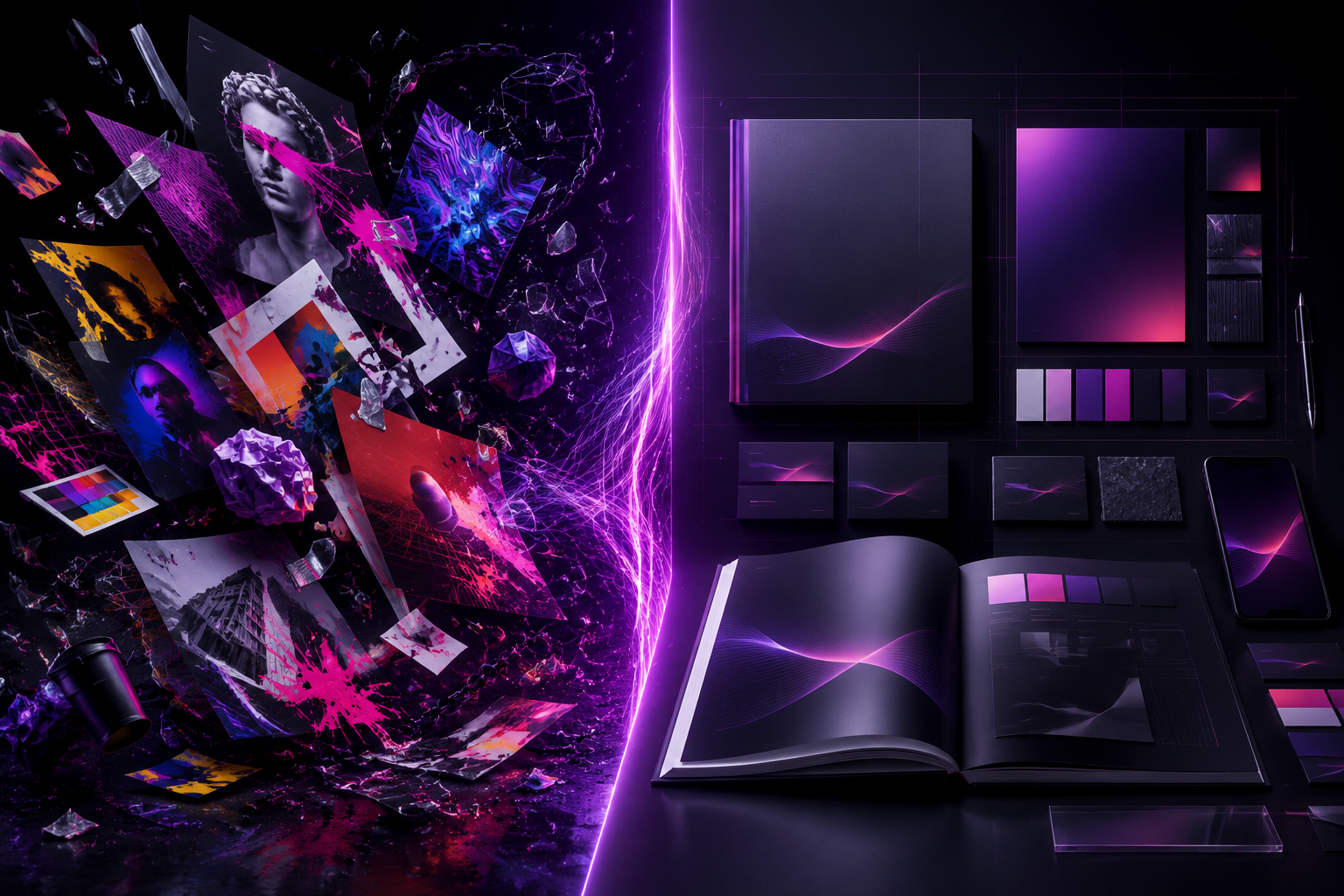
In previous articles, we learned that branding is the foundation of marketing, and a brand book is the roadmap that keeps that identity alive. But now comes the real question: what actually makes a good brand book? And more importantly, when it’s time to bring it to life, who should you trust with the job—a graphic designer, a visual identity designer, or a creative agency?
The Features and Standards of a Professional Brand Book
A standard brand book is much more than a few pages showing a logo and color palette. If you want it to be truly useful in practice, it should have the following qualities:
1. Comprehensive, Yet Simple
A brand book should be complete enough that everyone—from the print shop to the Instagram manager—clearly understands how to work with your brand. At the same time, it should not be so complicated that no one actually wants to read it.
2. Clear “Don’ts”
One of the most important standards of a strong brand book is defining the red lines. For example: Never place the logo on a busy background, or Do not use decorative fonts in formal brand communications.
3. Strategic Consistency
Every visual decision—whether it’s a purple color palette or a modern typeface—should have a strategic reason behind it and align with your brand’s mission.
4. Multi-Platform Usability
Your standards should work across both digital environments, such as websites and apps, and physical applications, such as billboards, packaging, and print materials.
Graphic Designer or Visual Identity Designer: Which One Is Right for You?
Many business owners treat these two roles as if they were the same, but there is an important difference—and that difference can shape the final quality of your brand book.
Graphic Designer
A graphic designer usually focuses on solving visual problems in individual projects, such as designing a poster, a brochure, or a logo. If your brand strategy is already well defined and you simply need visual execution, an experienced graphic designer can be a valuable choice.
Visual Identity Designer
A visual identity designer thinks beyond aesthetics. They look at how your brand functions as part of a larger system. Instead of creating a single logo, they build a visual language. For brand book design, a visual identity designer is often the smarter choice because they are skilled in creating consistent and scalable systems.
Agencies: When Is the Right Time to Work With One?
Agencies bring together a team of specialists, including strategists, copywriters, and designers. But when does it actually make sense to invest in an agency?
The answer is simple: when your business has grown beyond the “one-person operation” stage and needs a 360-degree perspective. Agencies do more than design a brand book—they also help ensure that the brand book is applied correctly across campaigns, communications, and marketing assets.
Advertising Agency vs. Creative Agency
Understanding this difference is essential.
1. Advertising Agency
The main focus of an advertising agency is distribution and visibility. They specialize in media buying, sales campaigns, and choosing the right channels to promote your product or service. If you already have a clear brand book and now want to push your business into the market more aggressively, this is where an advertising agency becomes useful.
2. Creative Agency
A creative agency, such as Hamora, focuses on creation and communication. Creative agencies work on concepts, art direction, technology, and brand storytelling. They are the ones who build the identity and brand book that advertising agencies may later use in campaigns and promotions.
A Golden Rule
If your brand identity is still unclear, going directly to an advertising agency is a mistake. They may help promote your business, but they will be spending money to advertise something that still has no real personality. Before advertising, your brand needs solid roots—and that work belongs to a creative agency.
Client Involvement in Design: Helpful or Harmful?
Many clients believe that directly controlling design details—such as colors, typography, or element sizes—shows expertise. In reality, the smartest clients focus on goals, not tools.
Your role is to explain what kind of feeling your brand should create in the audience—strength, trust, warmth, elegance, innovation, or anything else. Then you should allow the visual identity specialist to decide which colors, fonts, and design systems can communicate that feeling most effectively.
Conclusion
Designing a brand book is not an expense—it is an investment that prevents much larger costs in the future. If you are just starting out and your budget is limited, working with a skilled visual identity designer is often the best move. But if you are aiming for a complete, refined, and highly consistent brand system, a creative agency can be your strongest long-term partner.
Because in the end, advertising without a brand book is like throwing paint onto a wall that hasn’t even been built yet.